
Quotes By James Clerk Maxwell
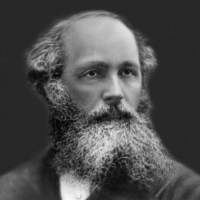
Physicist
James Clerk Maxwell
Jun 13, 1831 - Nov 05, 1879
Thoroughly conscious ignorance is the prelude to every real advance in science.

Happy is the man who can recognize in the work of to-day a connected portion of the work of life and an embodiment of the work of Eternity.
I have looked into the most philosophical systems and have found none that will not work without God.
It is a good thing to have two ways of looking at a subject, and to admit that there are two ways of looking at it.
We can scarcely avoid the inference that light consists in the transverse undulations of the same medium which is the cause of electric and magnetic phenomena.
I have also a paper afloat, with an electromagnetic theory of light, which, till I am convinced to the contrary, I hold to be great guns.
Faraday is, and must always remain, the father of that enlarged science of electromagnetism.
The numbers may be said to rule the whole world of quantity, and the four rules of arithmetic may be regarded as the complete equipment of the mathematician.
Mathematicians may flatter themselves that they possess new ideas which mere human language is as yet unable to express.
The true logic of this world is in the calculus of probabilities.
The 2nd law of thermodynamics has the same degree of truth as the statement that if you throw a tumblerful of water into the sea, you cannot get the same tumblerful of water out again.
I believe, with the Westminster Divines and their predecessors ad Infinitum that Man's chief end is to glorify God and to enjoy him for ever.
The world may be utterly crazy, and life may be labour in vain; But I'd rather be silly than lazy, and would not quit life for its pain.
I have the capacity of being more wicked than any example that man could set me.
It is of great advantage to the student of any subject to read the original memoirs on that subject, for science is always most completely assimilated when it is in the nascent state.
In Science, it is when we take some interest in the great discoverers and their lives that it becomes endurable, and only when we begin to trace the development of ideas that it becomes fascinating.
Science is incompetent to reason upon the creation of matter itself out of nothing. We have reached the utmost limit of our thinking faculties when we have admitted that because matter cannot be eternal and self-existent it must have been created.
The student who uses home made apparatus, which is always going wrong, often learns more than one who has the use of carefully adjusted instruments, to which he is apt to trust and which he dares not take to pieces.
Popular Authors


