
Quotes By James Clerk Maxwell
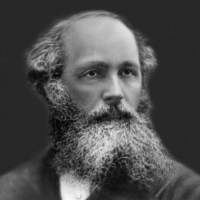
Physicist
James Clerk Maxwell
Jun 13, 1831 - Nov 05, 1879
It was a great step in science when men became convinced that, in order to understand the nature of things, they must begin by asking, not whether a thing is good or bad, noxious or beneficial, but of what kind it is.

The theory I propose may therefore be called a theory of the Electromagnetic Field because it has to do with the space in the neighbourhood of the electric or magnetic bodies, and it may be called a Dynamical Theory, because it assumes that in the space there is matter in motion.
In speaking of the Energy of the field, however, I wish to be understood literally. All energy is the same as mechanical energy, whether it exists in the form of motion or in that of elasticity, or in any other form. The energy in electromagnetic phenomena is mechanical energy.
Whenever energy is transmitted from one body to another in time, there must be a medium or substance in which the energy exists after it leaves one body and before it reaches the other.
All the mathematical sciences are founded on relations between physical laws and laws of numbers, so that the aim of exact science is to reduce the problems of nature to the determination of quantities by operations with numbers.
So many of the properties of matter, especially when in the gaseous form, can be deduced from the hypothesis that their minute parts are in rapid motion, the velocity increasing with the temperature, that the precise nature of this motion becomes a subject of rational curiosity.
Gases are distinguished from other forms of matter, not only by their power of indefinite expansion so as to fill any vessel, however large, and by the great effect heat has in dilating them, but by the uniformity and simplicity of the laws which regulate these changes.
If we betake ourselves to the statistical method, we do so confessing that we are unable to follow the details of each individual case, and expecting that the effects of widespread causes, though very different in each individual, will produce an average result on the whole nation, from a study of which we may estimate the character and propensities of an imaginary being called the Mean Man.
In order to obtain physical ideas without adopting a physical theory we must make ourselves familiar with the existence of physical analogies. By a physical analogy I mean that partial similarity between the laws of one science and those of another which makes each of them illustrate the other.
Almighty God, Who hast created man in Thine own image, and made him a living soul that he might seek after Thee, and have dominion over Thy creatures, teach us to study the works of Thy hands, that we may subdue the earth to our use, and strengthen the reason for Thy service.
I think men of science as well as other men need to learn from Christ, and I think Christians whose minds are scientific are bound to study science that their view of the glory of God may be as extensive as their being is capable.
That small word Force, they make a barber's block, ready to put on meanings most strange and various, fit to shock pupils of Newton. The phrases of last century in this linger to play tricks, Vis viva and Vis Mortua and Vis Acceleratrix. Those long-nebbed words that to our text books still cling by their titles, and from them creep, as entozoa will, into our vitals. But see! Tait writes in lucid symbols clear one small equation; and Force becomes of Energy a mere Space-variation.
My soul is an entangled knot, upon a liquid vortex wrought by Intellect in the Unseen residing, and thine doth like a convict sit, with marline-spike untwisting it, only to find its knottiness abiding.
Every existence above a certain rank has its singular points; the higher the rank the more of them. At these points, influences whose physical magnitude is too small to be taken account of by a finite being may produce results of the greatest importance.
The vast interplanetary and vast interstellar regions will no longer be regarded as waste places in the universe. We shall find them to be already full of this wonderful medium; so full that no human power can remove it from the smallest portion of space or produce the slightest flaw in its infinite continuity.
Whether this vast homogeneous expanse of isotropic matter is fitted not only to be a medium of physical interaction between distant bodies, and to fulfil other physical functions of which perhaps we have as yet no conception, but also to constitute the material organism of beings exercising functions of life and mind as high or higher than ours are at present is a question far transcending the limits of physical speculation.
Science strips off, one after the other, the more or less gross materialisations by which we endeavour to form an objective image of the soul, till men of science, speculating, in their non-scientific intervals, like other men on what science may possibly lead to, have prophesied that we shall soon have to confess that the soul is nothing else than a function of certain complex material systems.
The University of Cambridge, in accordance with that law of its evolution, by which, while maintaining the strictest continuity between the successive phases of its history, it adapts itself with more or less promptness to the requirements of the times, has lately instituted a course of Experimental Physics.
The dimmed outlines of phenomenal things all merge into one another unless we put on the focusing-glass of theory, and screw it up sometimes to one pitch of definition and sometimes to another, so as to see down into different depths through the great millstone of the world.
In a few years, all great physical constants will have been approximately estimated, and that the only occupation which will be left to men of science will be to carry these measurements to another place of decimals.
Popular Authors


