
Quotes By Confucius
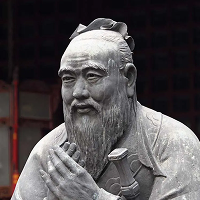
Philosopher
Confucius
551 BCE - 479 BCE

Things have their roots and branches. Affairs have their beginnings and their ends. To know what is first and what is last will lead one near the Way.
Employ the people as though you were assisting at an important sacrifice. Then there will be no feelings of opposition to you.
I am not bothered by the fact that I am not understood. I am bothered when I do not know others.
At fifteen my heart was set on learning; at thirty I stood firm; at forty I had no more doubts; at fifty I knew the will of heaven; at sixty my ear was obedient; at seventy I could follow my heart's desire without overstepping the boundaries of what was right.
To give one's self earnestly to the duties due to men, and, while respecting spiritual beings, to keep aloof from them, may be called wisdom.
The man of virtue makes the difficulty to be overcome his first business, and success only a subsequent consideration: this may be called perfect virtue.
Leaving virtue without proper cultivation; not thoroughly discussing what is learned; not being able to move towards righteousness of which a knowledge is gained; and not being able to change what is not good: - these are the things which occasion me solicitude.
Guide the people by law, subdue them by punishment; they may shun crime, but will be void of shame. Guide them by example, subdue them by courtesy; they will learn shame, and come to be good.
To show forbearance and gentleness in teaching others; and not to revenge unreasonable conduct - this is the energy of southern regions, and the good man makes it his study. To lie under arms; and meet death without regret - this is the energy of northern regions, and the forceful make it their study. Therefore, the superior man cultivates a friendly harmony, without being weak - How firm is he in his energy!
Popular Authors


